

Hey there! As a supplier of large blow molding machines, I've seen firsthand how crucial mold design is for the success of the blow molding process. In this blog post, I'm gonna share some tips on how to optimize the mold design for a large blow molding machine.
Understanding the Basics of Blow Molding
Before we dive into mold design, let's quickly go over the basics of blow molding. Blow molding is a manufacturing process used to create hollow plastic parts. The process involves heating a plastic tube, called a parison, and then blowing air into it to expand it against the walls of a mold. Once the plastic cools and solidifies, the mold is opened, and the finished part is ejected.
There are three main types of blow molding: extrusion blow molding, injection blow molding, and stretch blow molding. For large blow molding machines, extrusion blow molding is the most commonly used method.
Factors to Consider in Mold Design
When designing a mold for a large blow molding machine, there are several factors that you need to take into account. Here are some of the most important ones:
Part Geometry
The first thing you need to consider is the geometry of the part you want to produce. The shape, size, and wall thickness of the part will all have an impact on the mold design. For example, if you're making a part with a complex shape, you may need to use a multi-piece mold to ensure that the part can be ejected easily.
Material Selection
The type of plastic material you use will also affect the mold design. Different plastics have different melting points, flow properties, and shrinkage rates. You need to choose a material that is suitable for the blow molding process and that will meet the requirements of your part.
Cooling System
A proper cooling system is essential for ensuring that the plastic cools and solidifies evenly in the mold. This will help to prevent defects such as warping, sink marks, and uneven wall thickness. The cooling system can be designed using channels, water jackets, or other methods.
Ejection System
The ejection system is responsible for removing the finished part from the mold. It needs to be designed in such a way that it can eject the part without damaging it. There are several types of ejection systems, including mechanical, hydraulic, and pneumatic systems.
Gate Design
The gate is the opening through which the plastic enters the mold. The design of the gate can have a significant impact on the quality of the finished part. You need to choose a gate design that will allow the plastic to flow evenly into the mold and that will minimize the formation of weld lines and other defects.
Tips for Optimizing Mold Design
Now that you understand the factors that affect mold design, here are some tips for optimizing the mold design for a large blow molding machine:
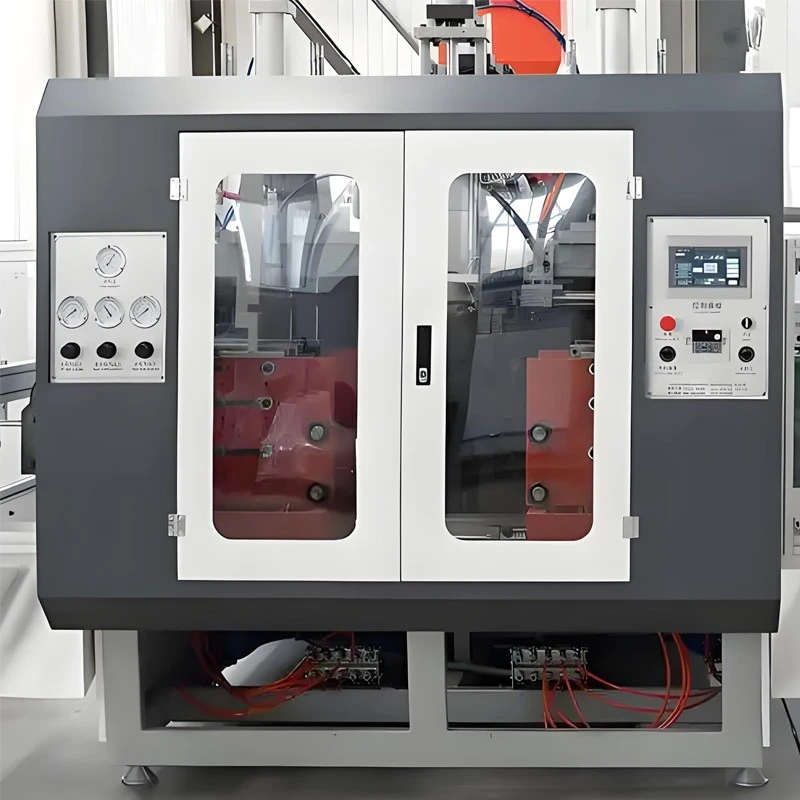

Use CAD/CAM Software
Computer-aided design (CAD) and computer-aided manufacturing (CAM) software can be extremely helpful in the mold design process. These tools allow you to create detailed 3D models of the mold and the part, which can help you to visualize the design and identify any potential problems before you start manufacturing the mold.
Work with an Experienced Mold Maker
Working with an experienced mold maker is crucial for ensuring that your mold is designed and manufactured to the highest standards. An experienced mold maker will have the knowledge and expertise to design a mold that is optimized for your specific application and that will produce high-quality parts.
Conduct Mold Flow Analysis
Mold flow analysis is a simulation technique that can be used to predict how the plastic will flow through the mold during the blow molding process. This can help you to identify any potential problems with the gate design, cooling system, or other aspects of the mold design. By making adjustments to the mold design based on the results of the mold flow analysis, you can improve the quality of the finished part and reduce the risk of defects.
Consider the Use of Insert Molds
Insert molds are a type of mold that allows you to incorporate additional components or features into the part during the blow molding process. This can be a cost-effective way to add functionality to the part without having to use additional manufacturing steps.
Optimize the Cooling System
As mentioned earlier, a proper cooling system is essential for ensuring that the plastic cools and solidifies evenly in the mold. To optimize the cooling system, you can use a combination of channels, water jackets, and other cooling methods. You can also adjust the flow rate and temperature of the cooling water to ensure that the plastic cools at the right rate.
Our Large Blow Molding Machines
At our company, we offer a wide range of large blow molding machines that are designed to meet the needs of different industries. Our machines are equipped with advanced features and technologies that ensure high-quality production and efficient operation.
One of our popular machines is the Double Station Blow Molding Machine. This machine allows you to produce two parts simultaneously, which can significantly increase your production efficiency.
We also have the Toy Blow Molding Machine, which is specifically designed for the production of toys. This machine is capable of producing high-quality toys with complex shapes and colors.
If you need to produce large parts, our 50 Litre Blow Moulding Machine is a great option. It can handle large volumes of plastic and produce parts with a maximum capacity of 50 litres.
Conclusion
Optimizing the mold design for a large blow molding machine is a complex process that requires careful consideration of several factors. By taking into account the part geometry, material selection, cooling system, ejection system, and gate design, and by following the tips outlined in this blog post, you can design a mold that will produce high-quality parts efficiently.
If you're interested in learning more about our large blow molding machines or if you have any questions about mold design, please don't hesitate to contact us. We'd be happy to help you with your blow molding needs.
References
- "Blow Molding: Principles and Practice" by John Beaumont
- "Plastic Materials" by J. A. Brydson


