

Hey there! As a supplier of Mannequin Blow Molding Machines, I often get asked, "Can a Mannequin Blow Molding Machine produce hollow mannequins?" Well, let's dive right into it and find out.
First off, let's understand the basics of blow molding. Blow molding is a manufacturing process used to create hollow plastic parts. It involves heating a plastic tube, known as a parison, and then placing it in a mold. Compressed air is then blown into the parison, forcing it to expand and take the shape of the mold. Once the plastic cools and solidifies, the mold is opened, and the finished part is ejected.
Now, when it comes to mannequins, there are different types - solid and hollow. Solid mannequins are usually made through processes like casting or carving, which can be time - consuming and expensive. On the other hand, hollow mannequins offer several advantages. They are lighter, which makes them easier to move around and display. They also use less material, which can reduce production costs.
So, can a Mannequin Blow Molding Machine make hollow mannequins? The answer is a resounding yes! These machines are specifically designed to create hollow plastic objects, and mannequins are no exception. The process starts with selecting the right type of plastic. Commonly used plastics for mannequins include polyethylene (PE) and polypropylene (PP). These plastics are durable, lightweight, and can be easily molded.
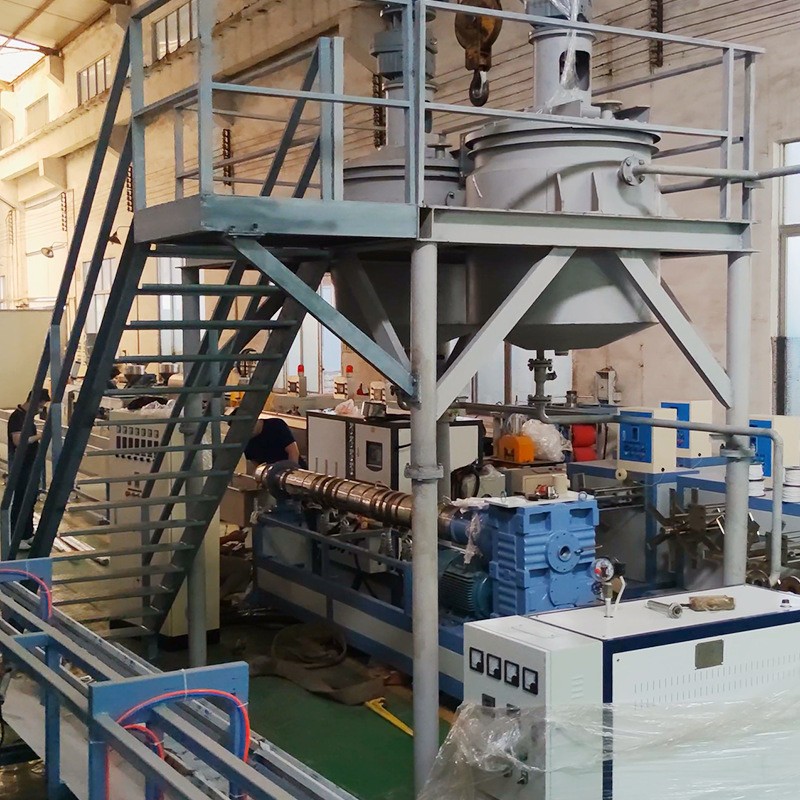

The Mannequin Blow Molding Machine heats the plastic resin until it becomes molten and then extrudes it into a parison. The parison is then transferred to a mannequin - shaped mold. Once the parison is in the mold, compressed air is introduced, causing the plastic to expand and fill the mold cavity. After a short cooling period, the mold opens, and a hollow mannequin is produced.
One of the key benefits of using a Mannequin Blow Molding Machine is the flexibility it offers. The machine can be adjusted to produce mannequins of different sizes, shapes, and thicknesses. Whether you need a life - sized mannequin for a clothing store or a smaller one for a toy display, the machine can be configured to meet your requirements.
Another advantage is the speed of production. Compared to other manufacturing methods, blow molding can produce mannequins at a much faster rate. This means that you can meet large - scale orders in a shorter period of time, which is great for businesses with high - volume demands.
Now, let's talk about the quality of the mannequins produced. A well - designed Mannequin Blow Molding Machine can produce high - quality hollow mannequins with smooth surfaces and accurate details. The machine uses advanced control systems to ensure that the plastic is evenly distributed throughout the mold, resulting in a consistent and uniform product.
Of course, like any manufacturing process, there are some challenges. One of the main challenges is achieving the right wall thickness. If the wall is too thin, the mannequin may be weak and prone to damage. If it's too thick, it can increase the weight and cost of the product. However, with proper calibration and adjustment of the machine, these issues can be easily overcome.
If you're in the market for other types of blow molding machines, we also offer IBC Barrel Blow Molding Machine, Chemical Barrel Blow Molding Machine, and Plastic Extrusion Blow Moulding Machine. These machines are designed to meet the specific needs of different industries and can produce high - quality plastic products.
In conclusion, a Mannequin Blow Molding Machine is a great investment for anyone looking to produce hollow mannequins. It offers a cost - effective, efficient, and flexible solution for manufacturing high - quality mannequins. Whether you're a small business or a large - scale manufacturer, this machine can help you meet your production goals.
If you're interested in learning more about our Mannequin Blow Molding Machines or any of our other products, don't hesitate to reach out. We'd love to have a chat and discuss how we can help you with your manufacturing needs.
References
- Blow Molding Handbook, by Rosato, David V., and Rosato, Dominick V.
- Plastics Processing: Principles and Modeling, by Agassant, Jean - Francois, et al.


